

How it works
Community capital comes in two main forms: community bonds and co-operative shares.
Both allow everyday people, businesses, and organizations to invest directly in community projects and earn a financial return — while keeping money working locally.
What the future of community investment could be like — if we act now.

Community bonds
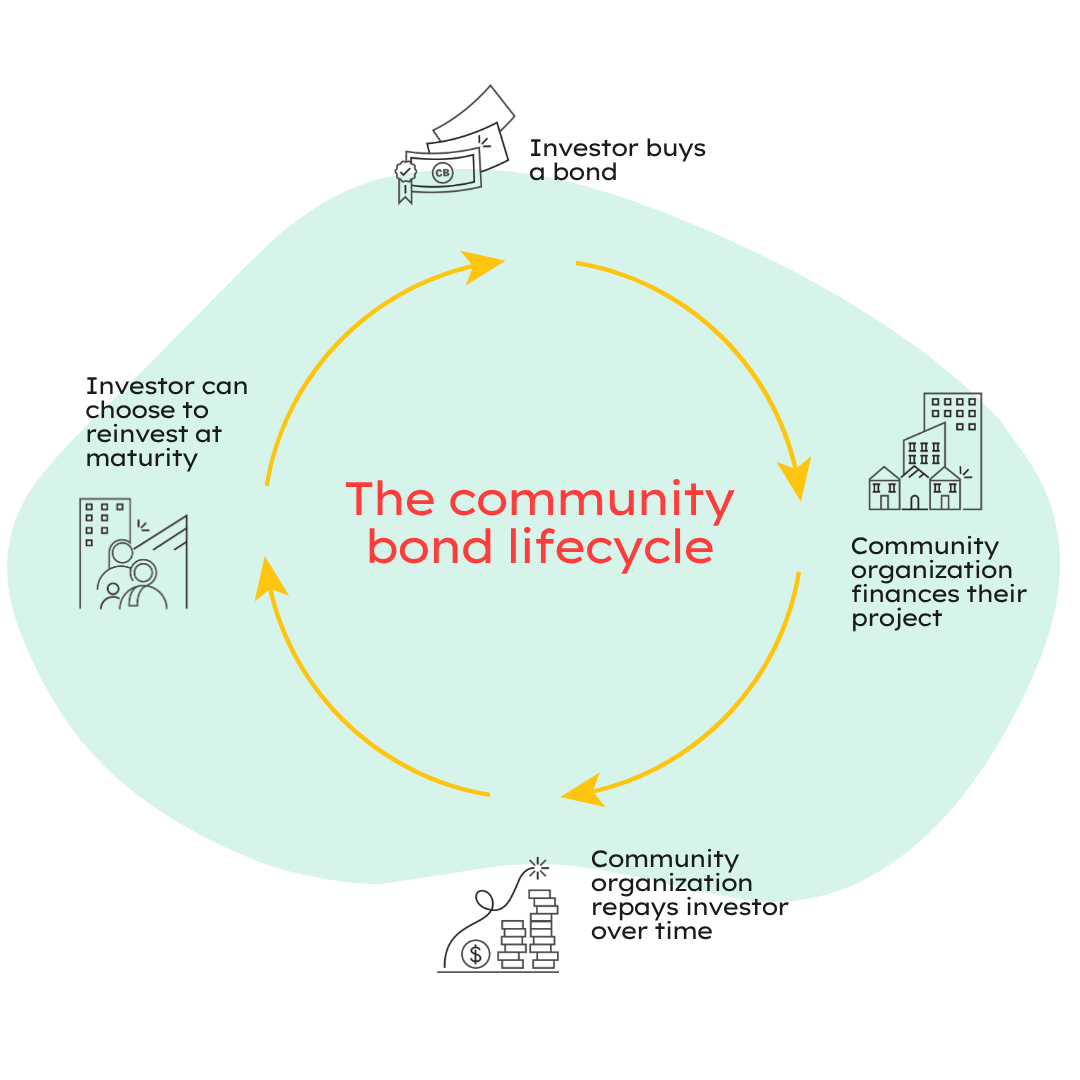
Community bonds are similar to traditional bonds, but instead of being issued by corporations or governments, they’re issued by nonprofits, charities, and co-ops to finance community projects like affordable housing and renewable energy.
Anyone can purchase a community bond — from an everyday, individual investor to a local business to another charity and beyond — and earn fair social and financial returns.
Community bonds are fixed-income investments, with set rates of return and maturity dates.

co-operative shares
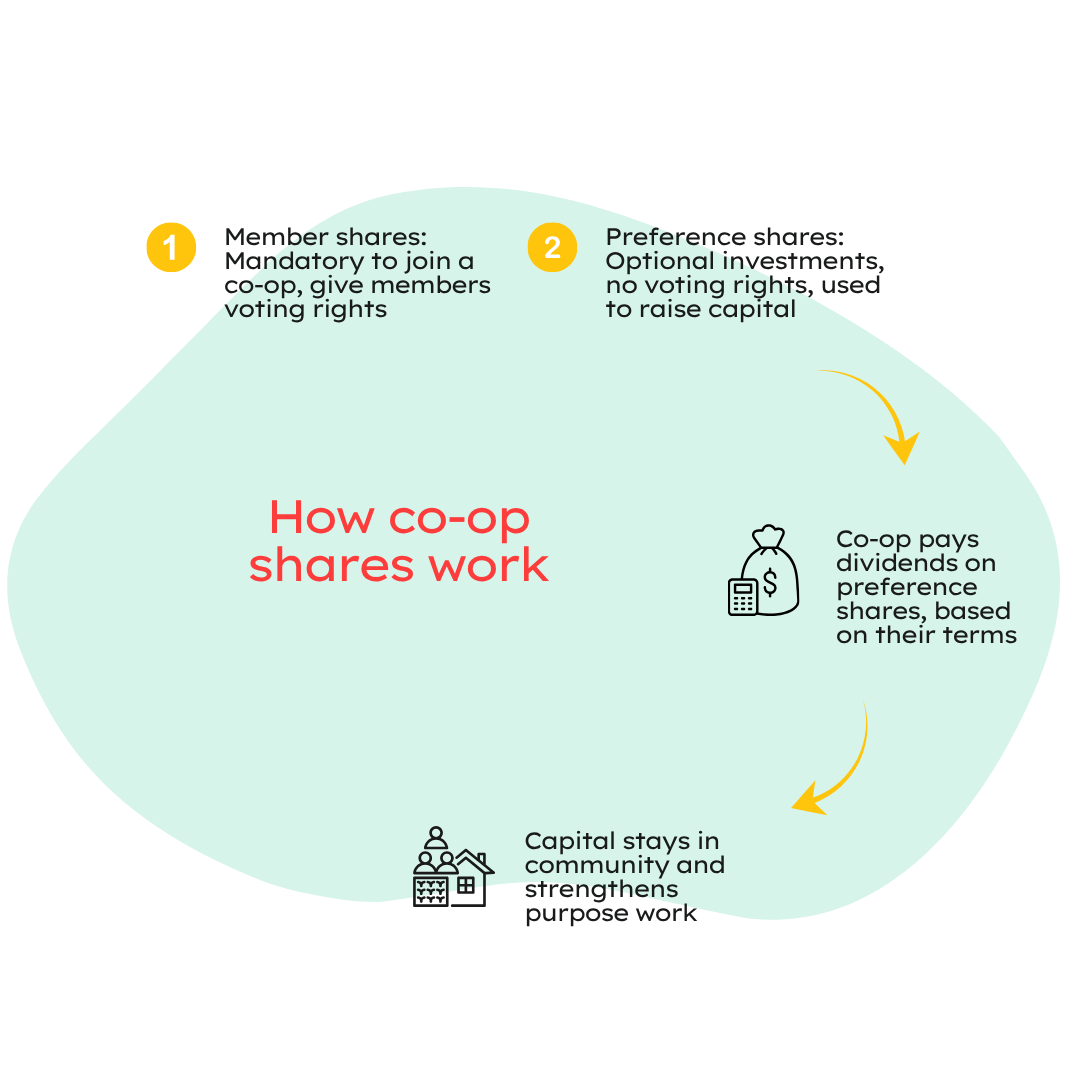
Co-operative shares are issued exclusively by co-operatives and represent an ownership stake in the organization. There are two main types: member shares, which provide voting rights and governance participation, and preference shares, which are the primary investment vehicle — offering financial returns in exchange for capital.
Returns on preference shares are paid as dividends, and terms are set by the co-op. Like community bonds, they are designed to offer fair returns while financing community-purpose work. Unlike bonds, they make investors part-owners of the enterprise — not just lenders to it.
Co-operative shares have deep roots in Canadian economic life. Long before community bonds emerged as a financing tool, co-operatives were raising capital through member investment — from the prairie grain pools and caisses populaires of the early 20th century, to credit unions, housing co-ops, and worker co-operatives today. The instrument has been quietly powering community ownership across the country for over a century.
That history also makes the full size of the market difficult to measure. Co-operative shares are governed by provincial co-operative legislation rather than securities law, meaning they don't flow through the same regulatory channels as bonds or public offerings. The true scale of community investment through co-operative shares in Canada is almost certainly larger than any single estimate suggests.
What are the benefits?
For investors, community bonds and co-operative shares both offer an opportunity to:
✔ Move money into values-aligned investments — and away from harmful industries
✔ See and feel the social returns of their investments by financing local projects that make their communities livable
✔ Earn fair and balanced financial returns
Co-operative shares also offer investors the chance to become part-owners of a community enterprise, participate in governance, and have a direct say in how the organization grows.
How community bonds are financing housing across Canada.

For nonprofits, charities, and co-operatives, community bonds offer:
✔ Autonomy over their financing — issuers set their own bond terms
✔ The opportunity to offer financial returns back to their community members, not just to commercial lenders
✔ A way of deepening connections to their communities, engaging more supporters for their work
For co-operatives, preference shares offer:
✔ Long-term equity capital that strengthens the co-op's balance sheet
✔ A way to bring community members in as owners, deepening democratic accountability
✔ A financing tool that reflects co-operative values — community investment that builds community ownership